The Colosseum is the most visited monument in Italy, and for good reason. Two thousand years after it opened, the amphitheatre still dominates the centre of Rome like it was built yesterday. But the Colosseum is just the beginning – the real experience of ancient Rome only clicks when you combine it with the Roman Forum and Palatine Hill, the political heart and imperial residence of the empire that stood right next door.
This guide is the one we wish every traveller read before landing in Rome. We run tours through the Colosseum, the Forum and the Palatine every week, so what follows is what we actually tell friends and family when they ask. No fluff – just what works.

Why this is one experience, not three separate visits
Most visitors treat the Colosseum as a standalone attraction and rush through the Forum and Palatine as an afterthought. That’s a mistake. Your ticket to the Colosseum always includes the Roman Forum and Palatine Hill, and you need all three to understand how ancient Rome actually worked.
The Colosseum (officially the Flavian Amphitheatre) was inaugurated in 80 AD under Emperor Titus. It held up to 50,000 spectators, who watched gladiator fights, wild animal hunts, mock sea battles and public executions – free of charge, thanks to the emperor. The engineering behind it – retractable awnings, a complex underground level with lifts for animals, a numbered seating system that could empty the building in fifteen minutes – is still studied today.
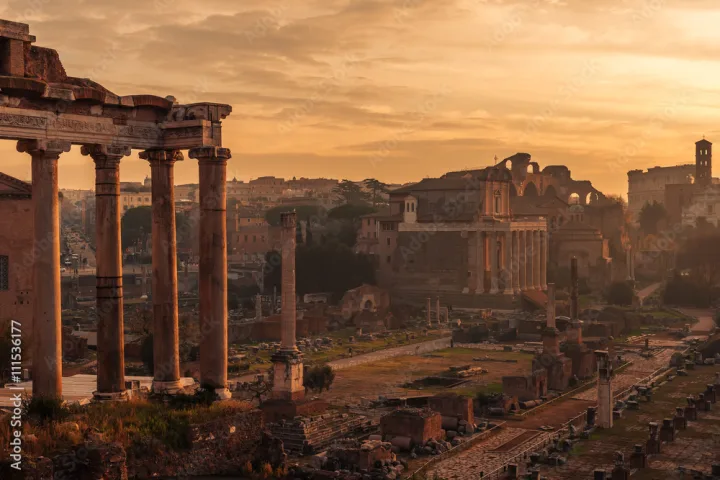
The Roman Forum, a five-minute walk away, was the centre of public life for a thousand years: temples, law courts, markets, triumphal arches, and the Senate house where Caesar was murdered. And Palatine Hill, rising above the Forum, is where the emperors lived – the word “palace” literally comes from its name.
Together, the three sites tell one continuous story. Separately, each one loses half its meaning.
How to book your visit
The Colosseum uses timed entry, and slots fill up fast – especially during peak season from May to September. There are two ways to get in.
Option A: Book official tickets at colosseo.it.
Tickets open 30 days before your visit date. Set an alarm for 9:00 AM Rome time on the day they drop. Standard tickets are usually available if you’re quick. Premium experiences with access to restricted areas sell out within seconds.
Option B: Book a guided tour.
This is what we recommend for first-time visitors – not just because we run tours, but because the Colosseum has almost no signage inside. Without context, you’re looking at impressive ruins without understanding what made them work. Licensed tour operators also get a separate ticket allocation, so a guided tour is often the easiest way to secure your spot without the stress of refreshing a sold-out booking page.
Less ideal times: resellers at the top of search results charging three or four times the official rate for “skip-the-line” tickets that are just standard entry with a markup. If a listing doesn’t include a licensed guide or isn’t from the official site, think twice.
Best time to visit
By month:
- November to February – the quiet months. Shorter queues, softer light, and the monument is at its most atmospheric. Bring a jacket; Rome gets colder than people expect.
- March, April, October – the sweet spot. Mild weather, crowds manageable, the Forum looks spectacular with spring greenery or autumn colours.
- May, June, September – peak tourist season. Book weeks in advance.
- July and August – best to skip if possible. Daytime temperatures regularly hit 36 °C, shade is minimal, and you’ll be standing in queues under direct sun.
By time of day:
- First slot (8:30 AM) – always the best. Cooler, emptier, better light for photos.
- Last slot (around 5:30 PM in summer, earlier in winter) – the second-best option. Tour groups have largely cleared out.
- Midday (11 AM, 2 PM) – avoid. Maximum crowds, maximum heat, minimum atmosphere.
How to get there
- Metro: Line B, station “Colosseo”. You exit directly in front of the monument. By far the easiest option.
- Bus: Lines 51, 75, 81, 85, 87 and 118 all stop nearby.
- Tram: Line 3 stops at the Colosseum.
- Walking: From Piazza Venezia it’s a ten-minute walk along Via dei Fori Imperiali.
- Taxi: Useful from further out, but traffic around the centre is unpredictable. Budget extra time.
Do not drive. The area is a ZTL (limited traffic zone) and parking is effectively impossible.

What to see at each site
Inside the Colosseum
The second tier – the best angle on the arena and the underground chambers below. Most photos you’ve seen of the Colosseum are taken from here.
The Arena floor (if your ticket includes it) – smaller than you expect, but the perspective is unique. You look up at the tiered stands the way the gladiators did.
The Underground / hypogeum – the most fascinating part of the monument. Two levels of corridors, thirty-two animal pens, and the remains of the lift system that hauled lions up into the arena. Access depends on your ticket type and is only available with specific passes or a guided tour.
The permanent exhibition – on the upper tier, often overlooked. Artefacts from the site, including original architectural fragments. Worth 15 minutes.
The Arch of Constantine – immediately next to the exit. Free to see, built in 315 AD, and the largest surviving Roman triumphal arch.
The Roman Forum
The Forum is where ancient Rome happened: political speeches, religious ceremonies, criminal trials, triumphal processions. Look for the Temple of Saturn, the Arch of Titus, the Basilica of Maxentius, and the Senate House (Curia Julia) – one of the best-preserved buildings on the site. A guide makes an enormous difference here, because without one it’s easy to walk past the most important ruins without realising what they are.
Palatine Hill
The imperial residence district. This is where Augustus, Tiberius, Domitian and their successors built increasingly extravagant palaces. Today you’ll find sprawling ruins, shaded gardens, and the best panoramic views in central Rome – over the Forum on one side and the Circus Maximus on the other. It’s also the quietest of the three sites, which makes it a welcome change of pace after the Colosseum crowds.
Budget around three hours for the complete experience across all three sites. The Colosseum takes roughly an hour; the Roman Forum and Palatine Hill together take around two hours at a comfortable pace.
Rules and restrictions to know
- Timed entry is strict. Depending on your ticket type, you have a grace period of 15 to 30 minutes around your slot. Miss your window and you won’t get in.
- Bag size limit: roughly 30 × 20 × 15 cm. Anything bigger won’t clear security and there’s no cloakroom.
- No food or drinks insideapart from a sealed water bottle (strongly recommended – bring one).
- Dress code: none, but you’ll be outdoors and on uneven stone surfaces for hours. Wear comfortable shoes.
- Photography: allowed everywhere except where specifically marked. Tripods and selfie sticks are not permitted.
- Dogs: small dogs in carriers are allowed in the Forum and Palatine outdoor areas, but not inside the Colosseum itself.
Scams to avoid around the Colosseum
The area immediately outside is the most scam-heavy spot in Rome. A few rules:
- Ignore the “gladiators”. People dressed as centurions will offer photos for “a tip” that turns into €20 per person. They’re not employees of anything.
- Ignore anyone offering to “help you skip the line”. Official tickets are only sold at the on-site ticket office and on colosseo.it. Street sellers charge double for the same product.
- Watch your pockets on Metro Line Bespecially at Termini and Colosseo stations. This is Rome’s most active pickpocketing line.
- “Free bracelet” around the wrist – classic scam. Keep walking.
FAQ
Do I need to book in advance?
Yes. Walk-up tickets sell out quickly, especially in peak season. Official tickets go on sale 30 days before the visit date. A guided tour is the easiest way to guarantee your spot without the booking stress.
How long does the full visit take?
Around three hours for the Colosseum, Roman Forum and Palatine Hill combined. The Colosseum itself takes roughly an hour; the Forum and Palatine together take around two hours at a comfortable pace.
Is the Roman Forum worth visiting?
Absolutely. Many visitors end up finding the Forum even more impressive than the Colosseum – it was the political, religious and commercial centre of an empire that ruled the Mediterranean for centuries. Don’t skip it.
Can I visit the Colosseum at night?
Yes, through the official night tour (“A Night at the Colosseum”), which runs in spring and summer. Tickets are limited and must be booked in advance.
Is there free entry to the Colosseum?
The first Sunday of every month is free for everyone, but you can’t book – you queue on the day. Under-18s always enter free. EU citizens aged 18 to 25 get a reduced rate.
Do I need a guide?
You don’t need one, but the Colosseum and the Forum have almost no on-site explanations. Without context, you’re looking at impressive stones without understanding what made them extraordinary. A licensed guide turns three hours of walking into a story you’ll actually remember.
Experience ancient Rome with a local guide
The Colosseum, the Roman Forum and Palatine Hill are the kind of sites that reward context. Three hours with an archaeologist guide – walking through the amphitheatre, crossing the Forum where Caesar’s funeral pyre stood, and looking out over the city from the Palatine – will change how you see Rome for the rest of your trip.
Our private guided tour of the Colosseum, Roman Forum and Palatine Hill covers the complete experience: priority entrance, a licensed local guide, and around three hours walking through two thousand years of history at a pace that makes sense. Small groups or fully private – you choose.
See all our Rome tours for more ways to explore the city with someone who actually lives here.