Antoni Gaudi spent 50 years reshaping Barcelona. His buildings are scattered across the city, but four of them sit close enough together to walk in a single long day. The Gaudi Route is not an official itinerary; it is a sequence locals and architects have been recommending for decades, in a logical order that lets you watch his style evolve from playful young architect to obsessed visionary.
Why Walk the Gaudi Route
You can take a bus, take a metro, take a private tour. None of them give you what walking gives you: the moment you turn a corner and Casa Batllo appears, the slow uphill climb to Park Guell, the contrast between the Eixample grid and the chaos of Sagrada Familia rising above everything. Gaudi designed his buildings to be discovered on foot, not photographed from a bus window.
The full route is around 7 kilometres if you connect the four masterpieces. Allow a full day with breaks and ticket queues.
The Route in Order
1. Casa Vicens (optional starting point)
Gaudi’s first major work, finished in 1888. A summer house for a wealthy tile manufacturer, decorated with the bright ceramic checkerboards he would later refine. It opened to the public only in 2017, which is why most tourists skip it. Worth 90 minutes early in the morning if you want to see where his style began.
2. Casa Batllo
The first stop on Passeig de Gracia. Built in 1904 as a renovation of an existing building, Casa Batllo is the most theatrical of Gaudi’s facades: a roof in the shape of a dragon’s spine, bone-shaped pillars on the windows, a wash of mosaic in blue and green. The interior tour is excellent and the rooftop is one of the best in Barcelona.
3. Casa Mila (La Pedrera)
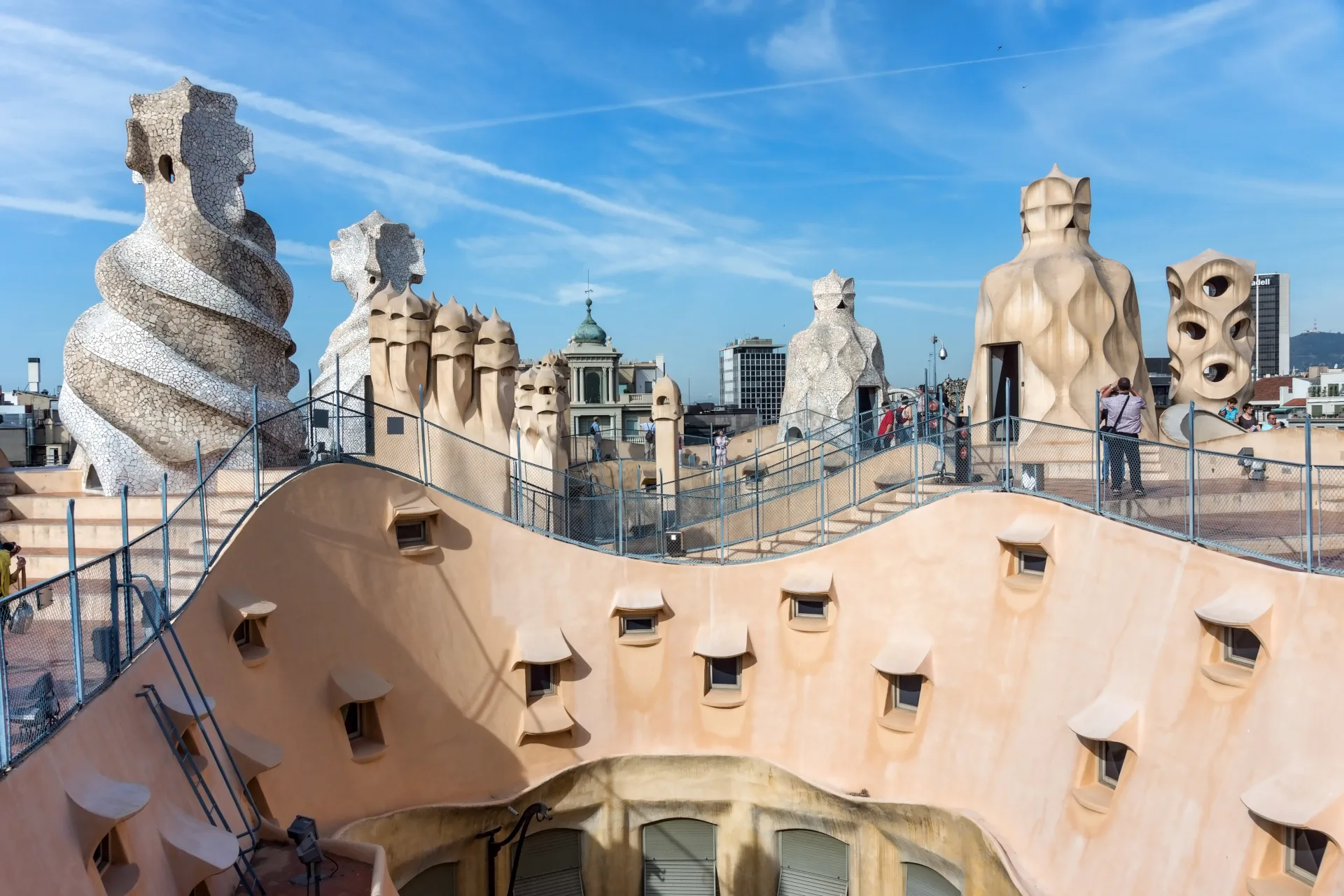
Five minutes’ walk up the same street. La Pedrera (“the stone quarry”) is Gaudi’s most sculptural building, with a wavy facade carved out of pale stone and a rooftop terrace covered in chimneys shaped like warriors. The attic museum explains Gaudi’s structural solutions using catenary arches.
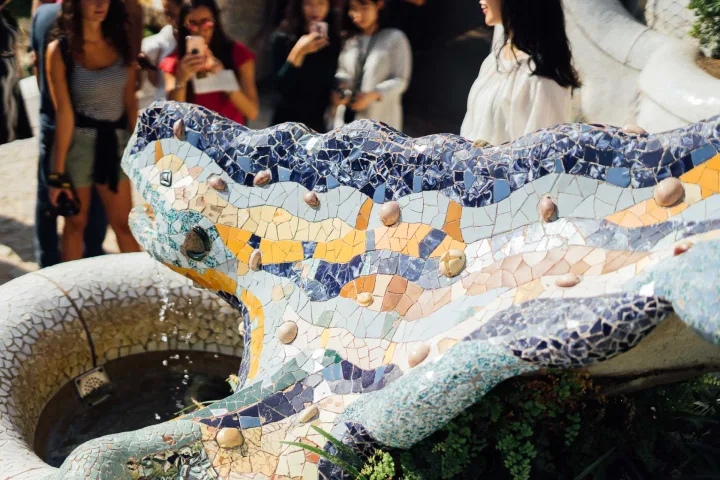
4. Park Guell
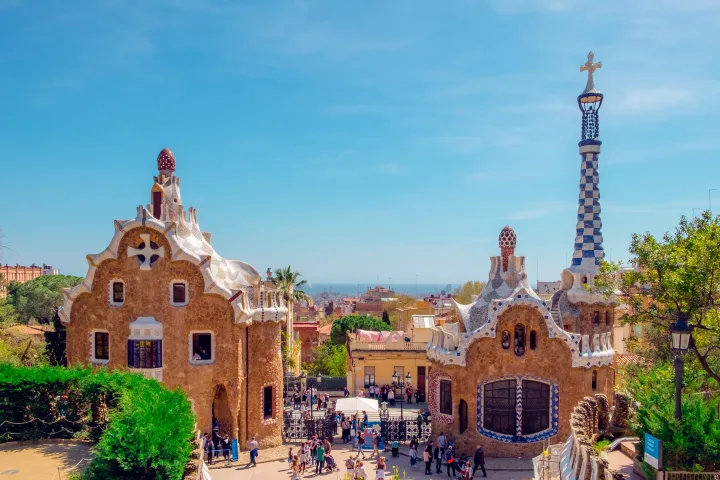
A 30-minute uphill walk or a metro ride. Park Guell was supposed to be a housing development for the Barcelona bourgeoisie that never sold. What remains is a public garden filled with the elements that would have welcomed residents: the salamander mosaic, the wavy bench, the stone columns. The Monumental Zone (the part with the famous sculptures) requires a paid timed-entry ticket. The rest of the park is free.
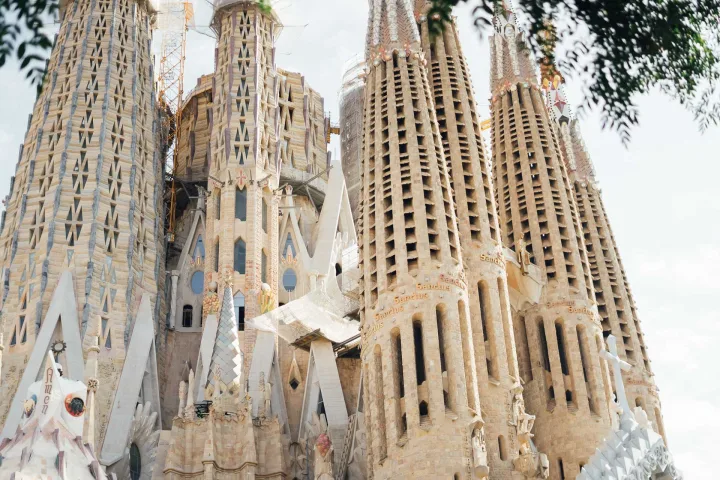
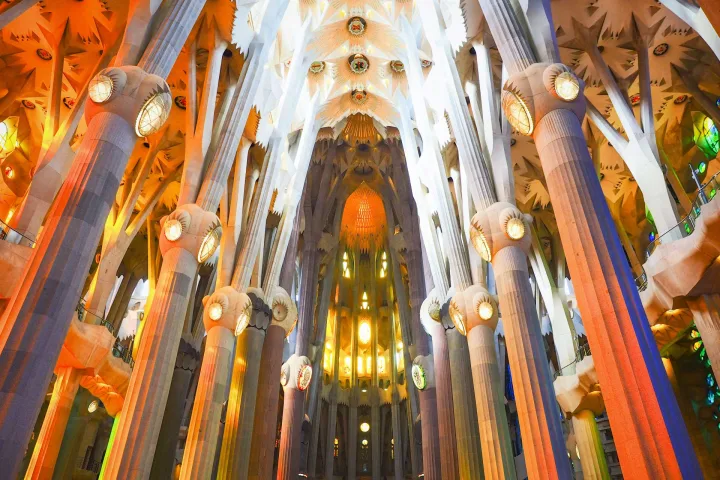
5. Sagrada Familia
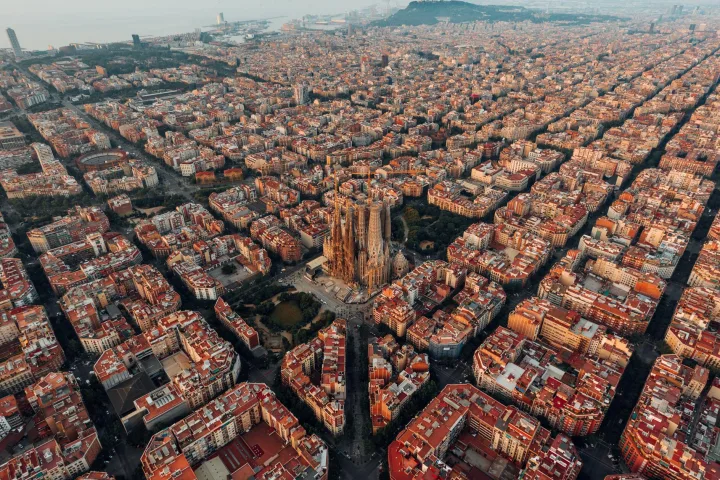
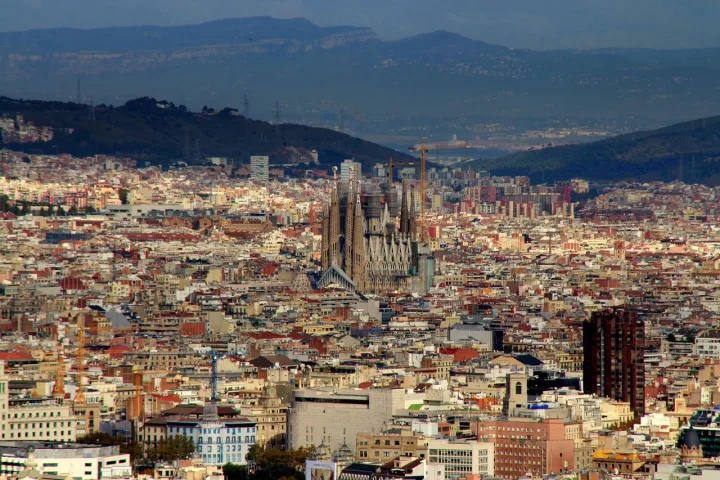
The end of the route. Gaudi worked on the basilica for the last 43 years of his life and is buried in its crypt. The construction continues today and is scheduled to complete around 2026. The interior, with its forest of inclined columns dissolving into the colored light from the stained-glass windows, is one of the most extraordinary spaces in modern architecture.
When to Start and Practical Tips
Start at 9 am with Casa Batllo. Tickets sell out daily for all four monuments: book online in advance, never at the door. Allow 90 minutes per building, plus walking time. Lunch between Casa Mila and Park Guell at a tapas bar in Gracia. End the day at Sagrada Familia for the late-afternoon light through the western stained-glass windows.
What You Can Skip
Casa Vicens, if you are short on time. The Tower of Bellesguard, unless you are an architecture student. The Crypt of Colonia Guell, unless you have a full day to spare. Walking the four main buildings is more than enough to understand Gaudi.