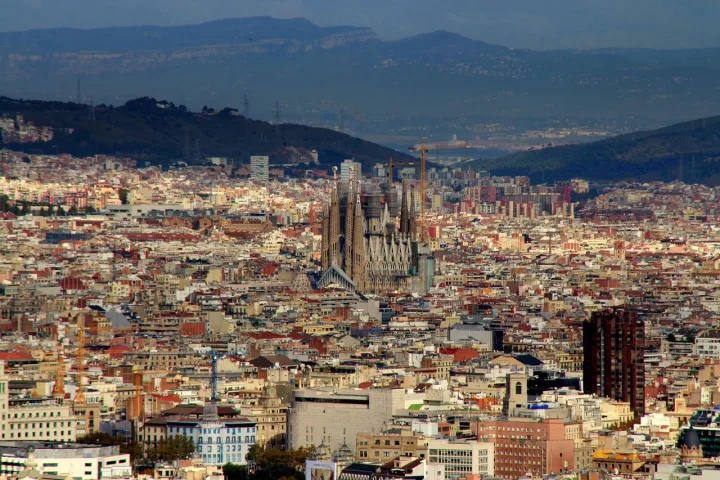
Montserrat is the day trip every Barcelona guidebook recommends and most visitors get slightly wrong. They arrive at eleven, queue for the Black Madonna, eat a sandwich in the cafeteria and leave having seen the monastery from the car park. Counting the train each way, half a day means five to six hours door to door, roughly three of them on the mountain. Here is how to spend them without missing the parts that matter.
A Monastery on a Saw-Toothed Mountain
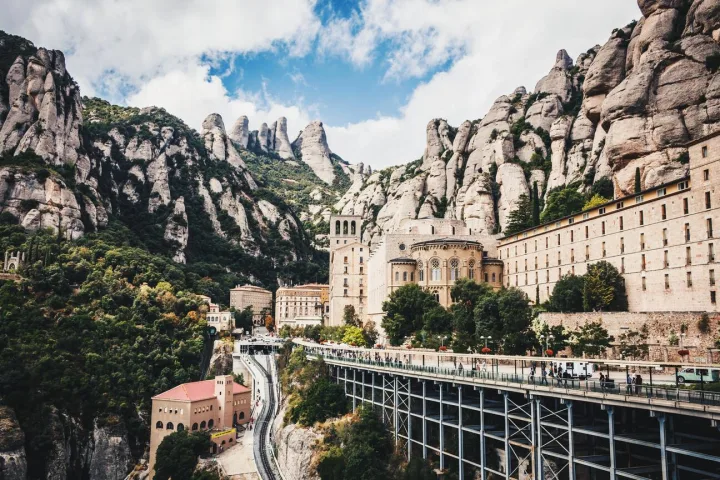
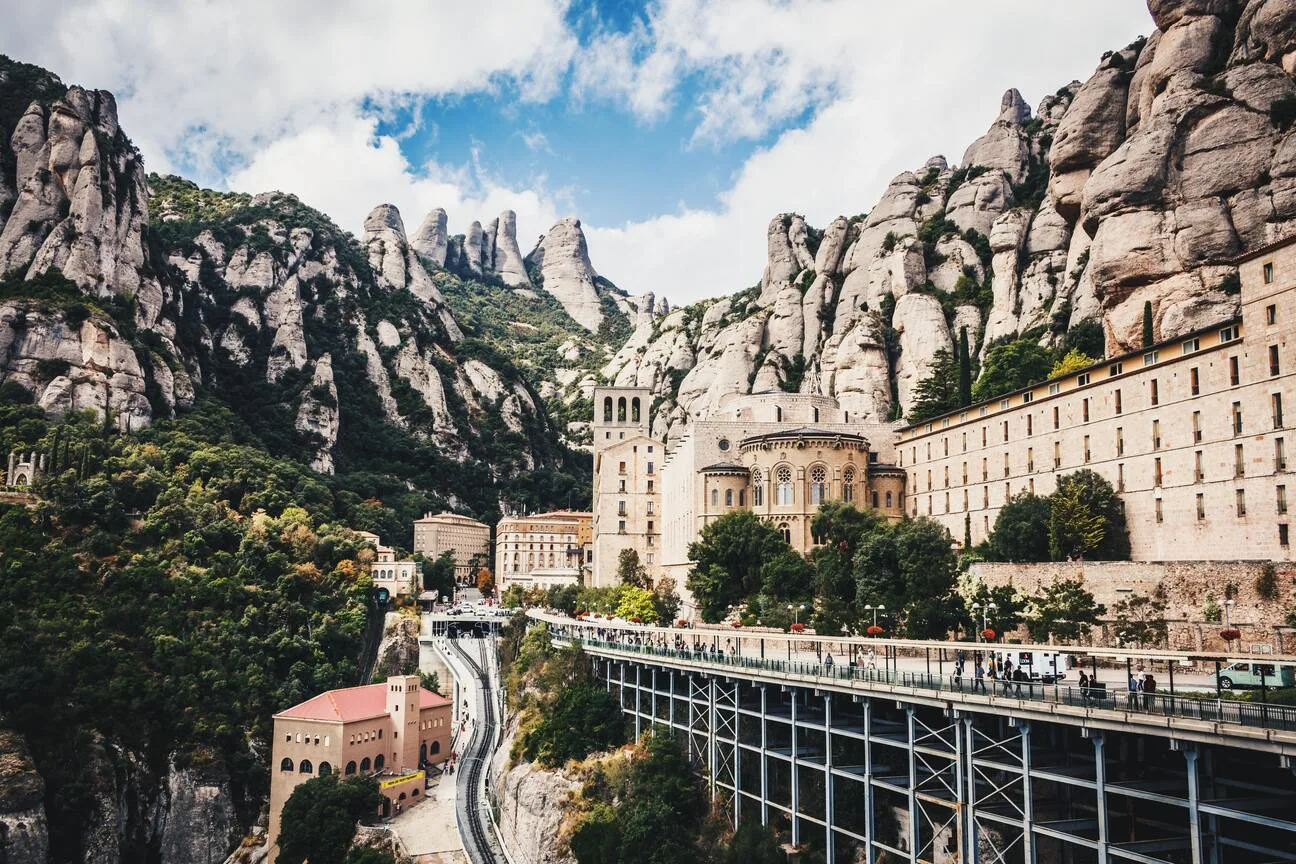
The name means “serrated mountain”, and the rock explains it: a ridge of pink conglomerate pillars that rises to 1,236 metres, about an hour north-west of Barcelona. Halfway up, wedged into a ledge, sits a Benedictine monastery founded in 1025 that has been a place of pilgrimage for nearly a thousand years.
For Catalans, Montserrat is the spiritual heart of the country and a symbol of its language and identity. The monastery survived a fire set by Napoleon’s troops in 1811 and kept Catalan alive in its liturgy during the decades when the language was banned in public life.
La Moreneta and the Escolania
Inside the basilica is the reason most pilgrims come: La Moreneta, a Romanesque wooden statue of the Virgin and Child, darkened over the centuries, and the patron saint of Catalonia. Visitors queue to climb behind the altar and touch the orb in her hand. Join that queue as soon as you arrive, because by late morning the wait gets long.
The other treasure is audible. The Escolania is one of the oldest boys’ choirs in Europe, singing at Montserrat for some seven centuries. The boys sing the Salve and the Virolai at 1 pm on most days, and at the 11 am mass on Sundays; it is free, but you need to book a place on the monastery’s website. The choir does not sing every day and stops during school holidays, so check the calendar before you plan around it.
Above the Monastery: Sant Jeroni and the Funiculars
This is where most visitors turn back. The Sant Joan funicular climbs steeply from the monastery to the upper paths in a few minutes. From the top station, a marked trail leads to the summit of Sant Jeroni, the highest point of the mountain, a little over an hour each way through the rock pillars. On a clear day you can see the Pyrenees. Be honest with your time: in half a day you can do the summit or the choir, not both.
If you prefer something gentler, the Santa Cova funicular drops down instead to an easy, quiet path that leads to the small chapel built where, according to legend, the statue was found. The path is lined with the Monumental Rosary, sculptural groups by Puig i Cadafalch, Josep Llimona and Gaudí himself, who designed the First Glorious Mystery. The funicular closes for maintenance some weeks a year, so check that it is running.
How to Get to Montserrat from Barcelona by Train
From Plaça d’Espanya, the R5 regional train runs to the foot of the mountain in about an hour. Then you choose how to go up, and the choice decides where you get off. For the cable car, get off at Aeri de Montserrat. For the rack railway, stay on one more stop to Monistrol de Montserrat. The cable car is quicker and far more dramatic; the rack railway is slower, gentler and the step-free option. The combined Trans Montserrat ticket covers the train, the ascent and the funiculars, and it is worth buying before you travel.
Take the first train of the morning and the basilica is far quieter than it will be at midday. Coaches start arriving soon after, and on weekends and in summer the square fills completely.
What to Eat and Bring Back
On the path between the station and the basilica, farmers from the surrounding villages sell mató, a fresh cheese eaten with honey, together with dried figs and homemade ratafia, a herbal liqueur. Skip the cafeteria and make a picnic of it instead.
Bring a layer even in summer, because the wind on the upper paths is noticeably colder than in Barcelona, and wear proper shoes: every good part of Montserrat involves stairs or rock.
If you would rather not manage trains, funiculars and timings yourself, our Montserrat half-day experience takes care of the logistics, and you are back in the city in time to finish the day on the Gaudí route.