If Rome has a food identity beyond pizza, it is pasta. And not just any pasta: four sauces that share an almost identical DNA but taste completely different. Carbonara, cacio e pepe, amatriciana and gricia are the four queens of Roman cuisine, and once you understand how they relate to each other, the rest of the city’s food scene starts to make sense.
The Roman Pasta DNA
The four sauces are built on the same three pillars: guanciale (cured pork cheek), pecorino romano (aged sheep cheese) and pasta water. Add or remove one element and you move from one sauce to the next. That is why Romans treat the four pastas almost as a family, and why ordering “spaghetti bolognese” in a Roman trattoria will earn you a raised eyebrow.
Cacio e Pepe: Two Ingredients, One Technique
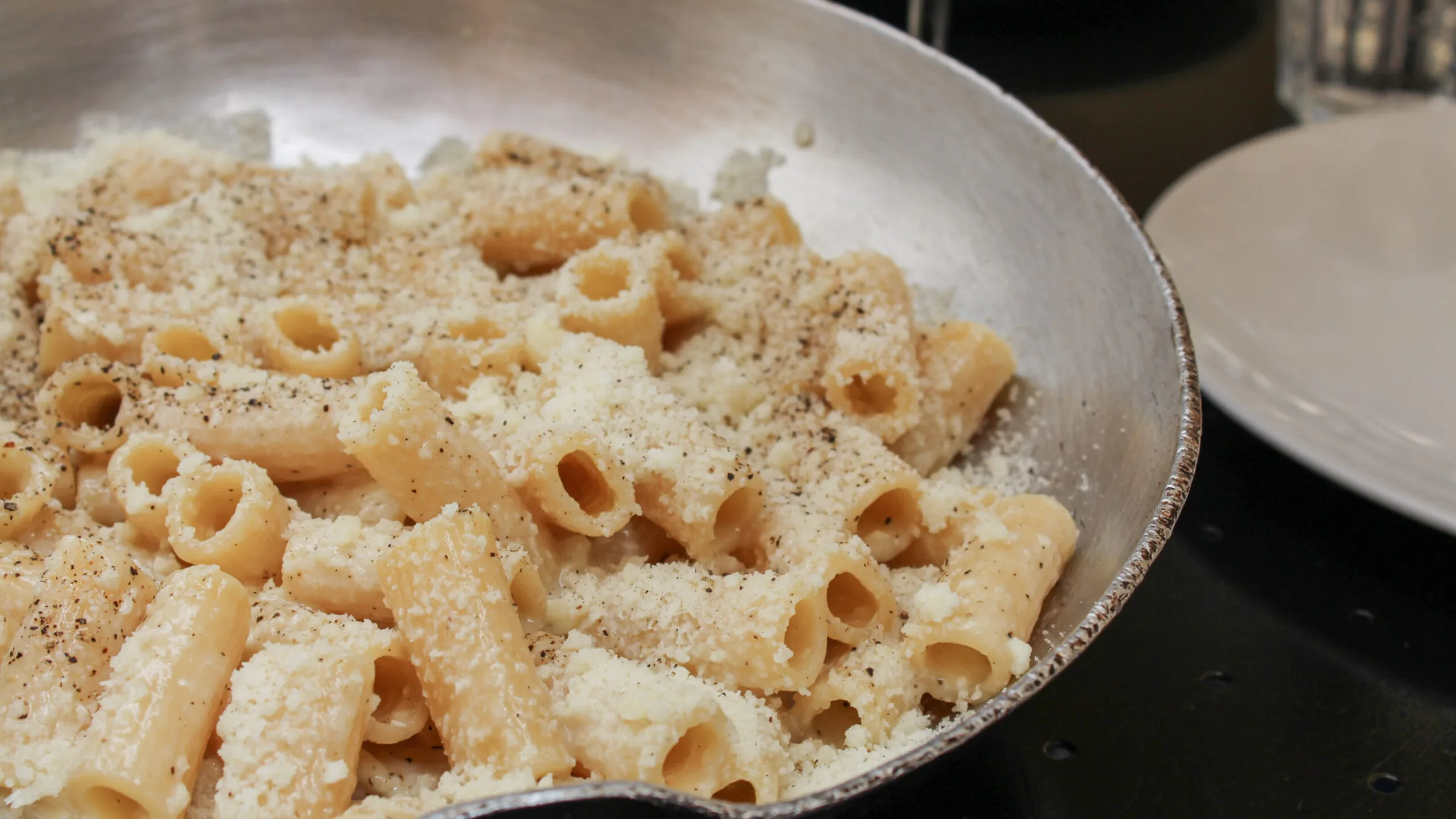
The simplest of the four and the hardest to get right. Just pasta water, pecorino romano and black pepper, emulsified into a creamy sauce without any butter or cream. The secret is in the temperature: too hot and the cheese clumps, too cold and it never melts. Roman cooks talk about cacio e pepe the way French cooks talk about omelette: a one-page recipe that takes years to master.
Gricia: The Mother Sauce
Add guanciale to cacio e pepe and you get gricia. This is the oldest of the four and, in many ways, the foundation for everything else. The fat rendered from the guanciale binds with the pecorino and creates a sauce richer than cacio e pepe but still without tomato or egg. If you want to understand Roman pasta, order gricia first.
Amatriciana: Tomato Enters the Picture
Take gricia and add tomato and you have amatriciana, originally from the town of Amatrice in the Lazio mountains. The tomato is barely cooked, just enough to release its sweetness. Traditional amatriciana is made with bucatini, the thick hollow spaghetti that catches the sauce in its tube. Spicy chilli is optional but common.
Carbonara: The Egg Yolk Crown
The most famous and the most misrepresented abroad. Take gricia, remove the pasta water emulsion and replace it with whisked egg yolks tempered off the heat. No cream, no garlic, no onion, no peas. The eggs cook gently from the residual heat of the pasta, creating a silky coating that should never scramble. Done right, carbonara is the most elegant of the four.
Where to Try Them in Rome
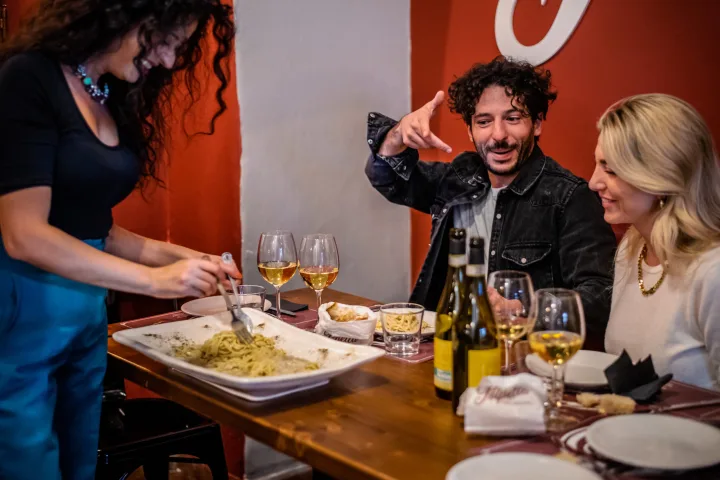
Trastevere and Testaccio are the historic neighborhoods for Roman pasta. Trattoria-style places that have been open for decades take these four sauces seriously, often offering all four on the same menu. Look for a chalkboard menu, a short wine list and waiters who do not switch to English unless they have to. Avoid restaurants directly facing major monuments: the rent is too high to pay for proper guanciale.
If you only have time for one, start with gricia. Once you understand it, the other three will reveal themselves.