In most of the world, the word “bologna” means a pale slice of processed meat in a school lunch sandwich. In the actual city of Bologna, mortadella is a different animal entirely: a 500-year-old delicacy, protected by European geographical indication, sliced paper-thin and served with the reverence of a fine cheese. If you have never tasted real mortadella di Bologna PGI, you have never tasted mortadella at all.
Forget Bologna Lunchmeat: This Is the Real Thing
The American “bologna” sausage is a distant cousin born of immigration and industrial shortcuts. Real mortadella di Bologna PGI is made from finely ground pork combined with cubes of pork fat, white pepper, myrtle berries, sometimes pistachios, then slow-cooked in steam ovens for hours. The result is silky, pink-rose in color, dotted with translucent white fat and crowned with whole peppercorns.
It is mild, fragrant and impossibly tender. Slice it too thick and you ruin it; sliced paper-thin, it almost melts.
A Sausage With Renaissance Origins
The earliest written references to mortadella in Bologna date back to the 14th century, but the modern recipe took shape in the 16th and 17th centuries. The name is thought to derive from “mortarium”, the mortar that was originally used to grind the meat. By the 1600s, mortadella had become a luxury product associated with Bolognese aristocracy and exported across Europe.
It was so prized that the city government issued laws to protect its production. A 1661 decree from Cardinal Farnese specified exactly what could be called “mortadella” and what could not. That spirit of protection survives today in the PGI status, granted by the European Union in 1998.
How Real Mortadella di Bologna PGI Is Made
The PGI specification controls everything: the cuts of pork used (a specific ratio of lean meat and high-quality fat), the spices, the cooking method and the geographic area of production. Real mortadella di Bologna can only be made in specific provinces of Emilia-Romagna and neighboring regions.
The lean pork is ground three times until it reaches a fine paste. Cubes of throat fat are added by hand. Spices are folded in. The mixture is stuffed into casings that can range from small sausages to giant cylinders weighing more than 100 kilos. Then comes the long, slow cooking in steam ovens, sometimes for 24 hours or more for the largest pieces.
How to Spot the Real Thing
Three signs. First, look for the PGI label and the words “Mortadella Bologna” specifically. Second, examine the cross-section: the white fat cubes should be distinct and translucent, not blurred into the pink meat. Third, smell it before tasting: real mortadella has a clean, slightly sweet aroma from the myrtle and pepper. Industrial imitations smell of nothing or, worse, of chemical preservative.
Inside Italy, the gold standard names include Pasquini, Felsineo and Alcisa, all from the Bologna area. Outside Italy, look for “mortadella di Bologna PGI” on the label, never “Bologna” or “bologna ham”.
Where to Try Mortadella in Bologna
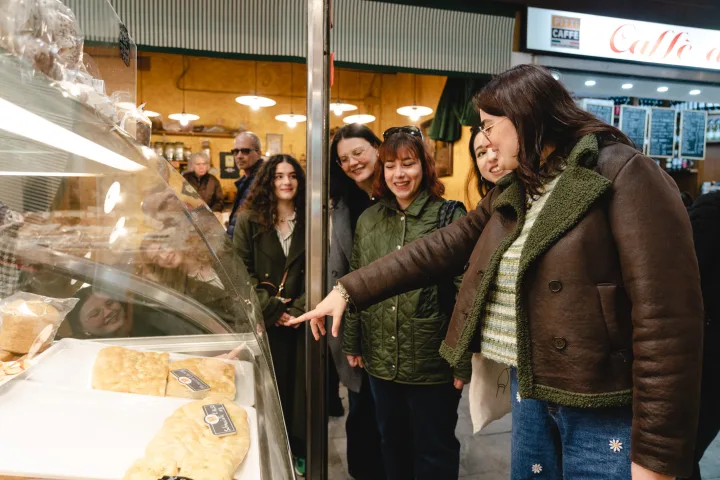
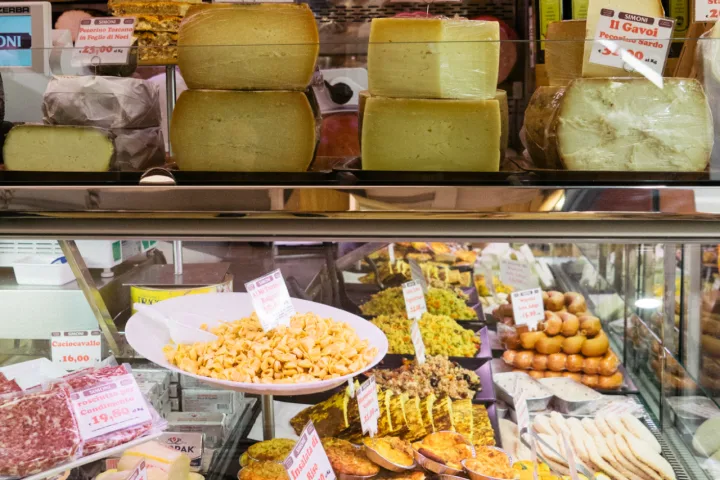
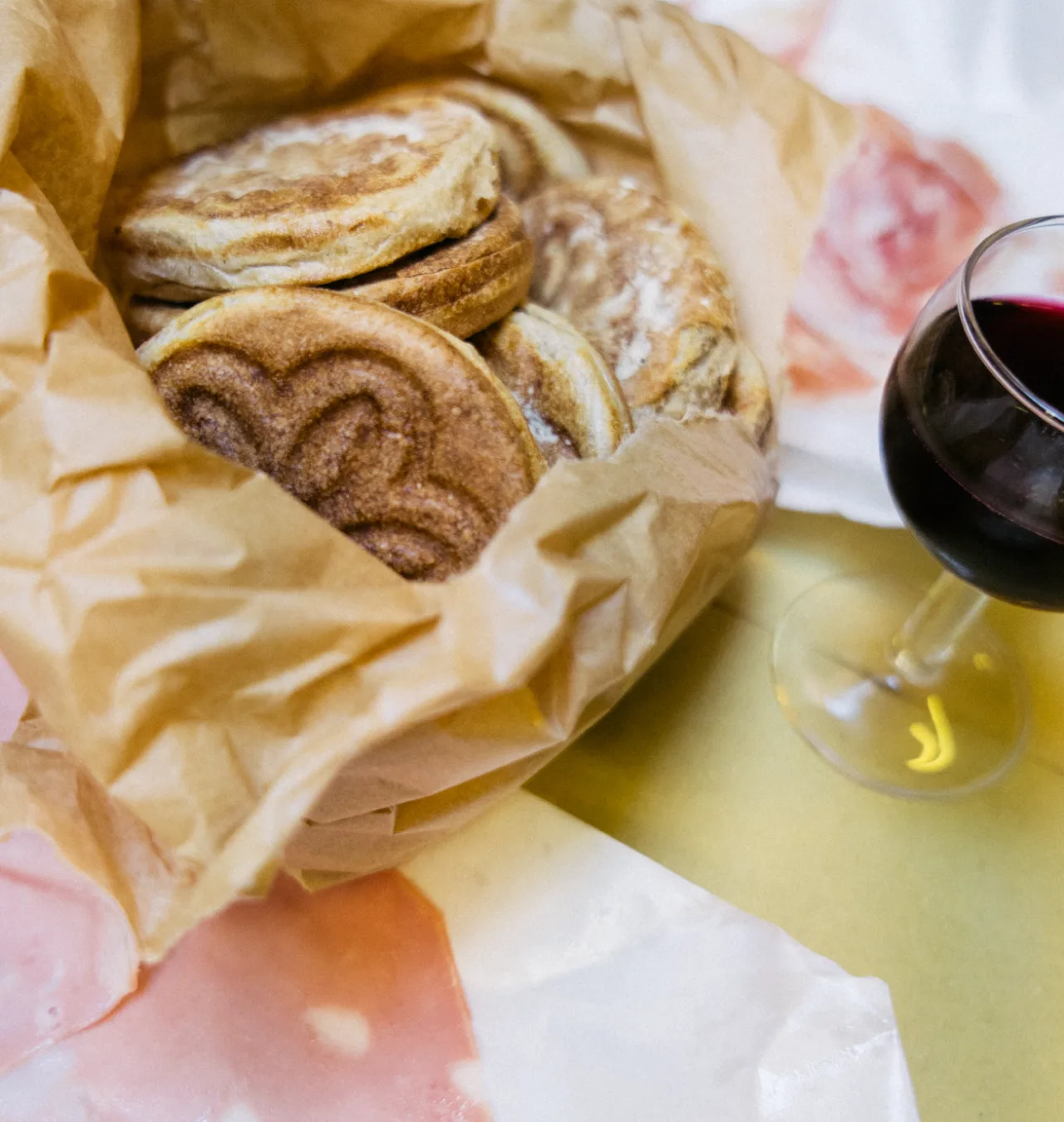
The historic place to eat mortadella is at a counter in the Quadrilatero food district, where butchers slice it to order on huge professional slicers. Have it tucked into a warm crescentina or piadina, paired with stracchino cheese. Or order a tagliere (a wooden board with cured meats and cheeses) at an aperitivo bar with a glass of Pignoletto frizzante.
The most authentic version is also the simplest: thin slices on fresh bread, no condiment, eaten standing up at a market stall. That is how locals have eaten mortadella for 500 years.