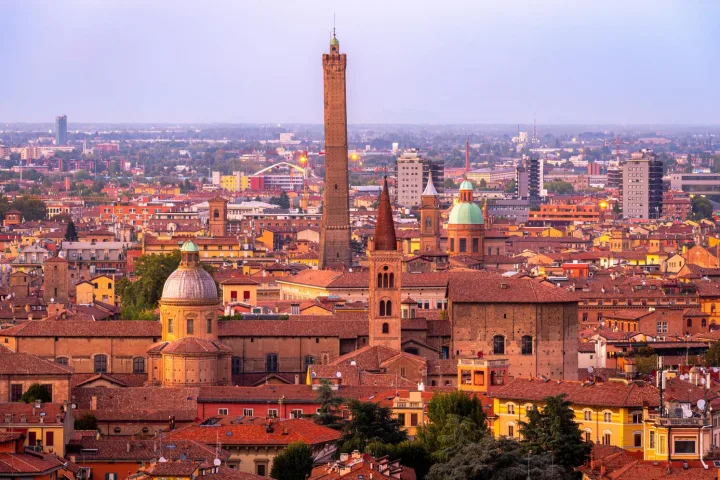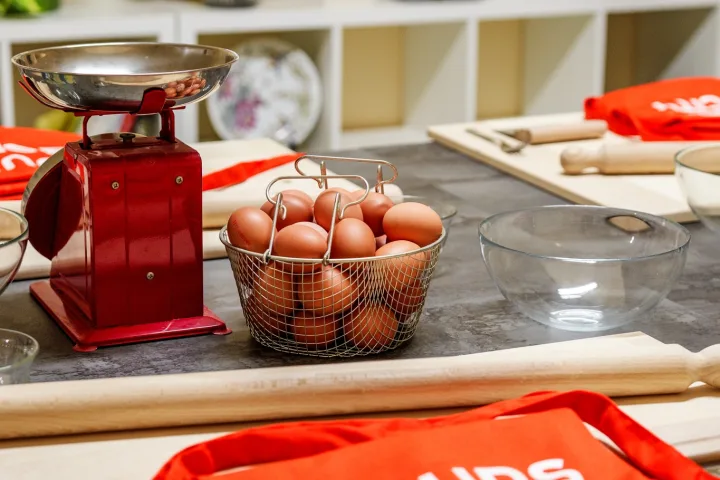
Bologna sits at the heart of Emilia-Romagna, a region Italians simply call “la Food Valley”. Three of Italy’s most famous food cities (Modena, Parma and Ferrara) are within an hour of Bologna by train, and you can taste your way through balsamic vinegar, prosciutto, Parmigiano Reggiano, pumpkin cappellacci and a few hundred years of culinary history in a single day or weekend.
Why Emilia-Romagna Is Called the Food Valley
The flat plains around the Po River have ideal conditions for animal husbandry, soft-wheat agriculture and the slow aging of cured meats and cheeses. The Roman roads that crossed the region in antiquity became trade routes that turned cities like Modena, Parma and Bologna into food hubs.
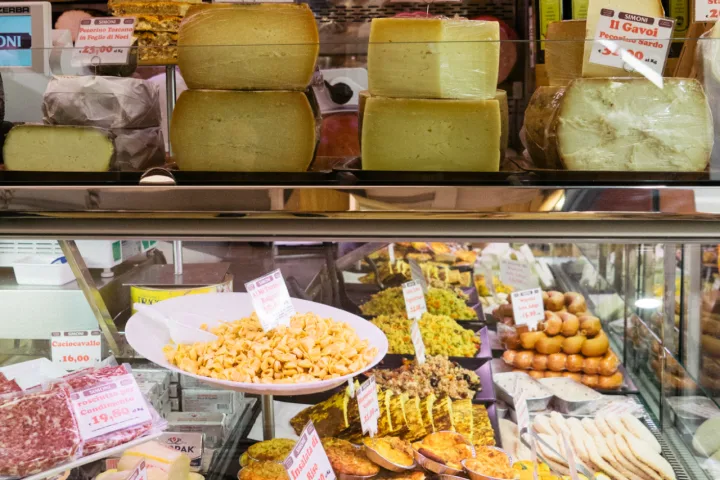
The result is the highest concentration of DOP and PGI products in Italy. Parmigiano Reggiano, Prosciutto di Parma, Aceto Balsamico Tradizionale di Modena, Mortadella di Bologna, Lambrusco wines, Squacquerone cheese: all of them are protected by European geographical indication and all of them come from this corner of Italy.
Modena: Balsamic Vinegar and Ferraris
40 minutes from Bologna by train. Modena is a small city with two big stories.
The first is balsamic vinegar. The real “Aceto Balsamico Tradizionale di Modena DOP” is aged for at least 12 years in a series of wooden barrels, each made of a different wood. The taste is nothing like the supermarket “balsamic”: it is thick, sweet, complex and used by the drop, not the spoonful. A small 100 ml bottle can cost 50 to 200 euros.
The second story is the cars. Modena is the home of Ferrari, Maserati and Pagani. The Ferrari Museum is a 20-minute drive from the center. Even if you are not a car person, the engineering is impressive.
Pair them: a balsamic tasting at a traditional acetaia in the morning, the Ferrari Museum in the afternoon.
Parma: Prosciutto and Parmigiano Reggiano
1 hour from Bologna by train. Parma is the only place in the world where Parmigiano Reggiano can be legally produced. The same region also makes Prosciutto di Parma, the air-cured ham aged for 18 months minimum.
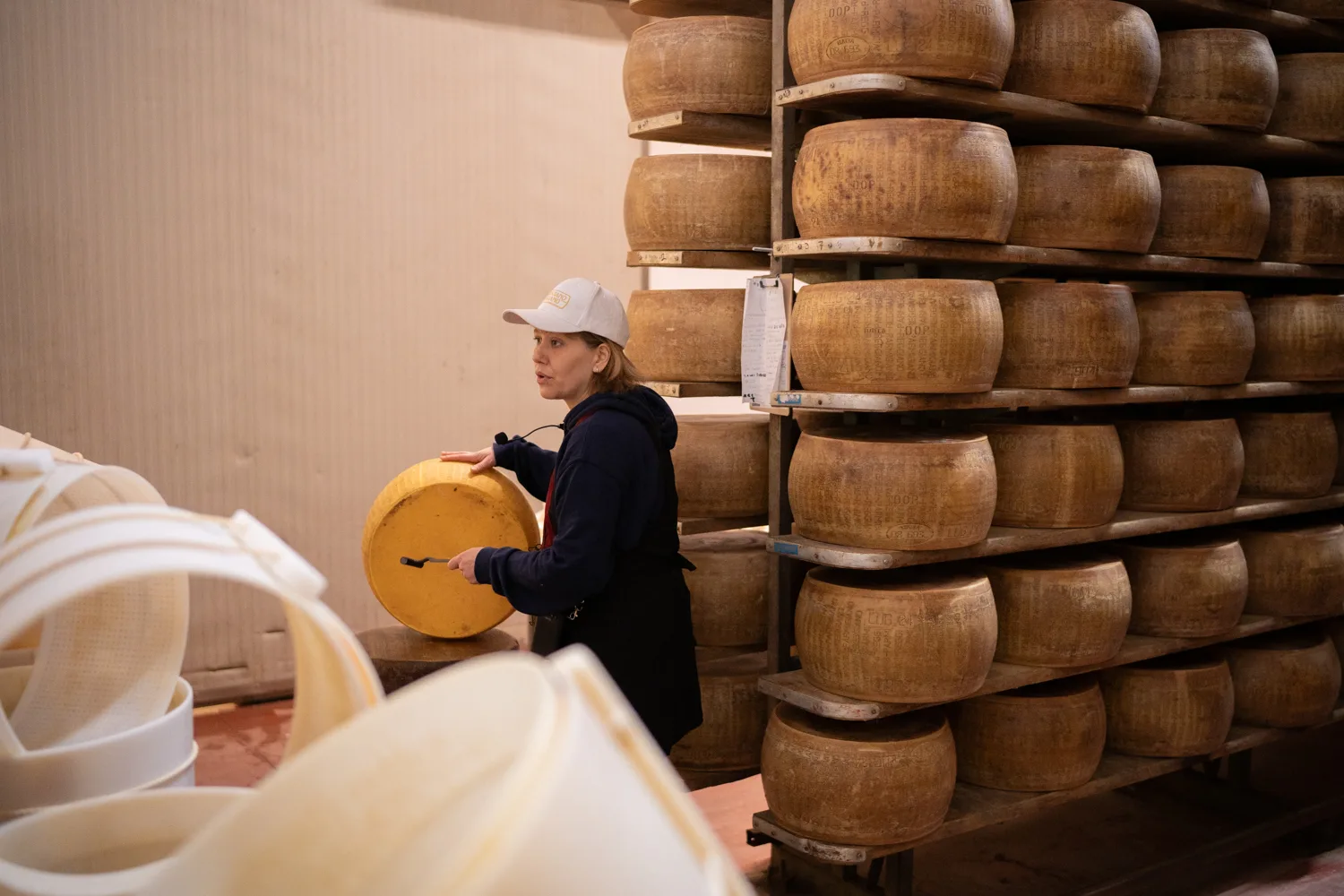
You can visit a working Parmigiano dairy (a “caseificio”) in the morning and watch the cheese being made: the milk arriving warm from the farm, the curds being cut with a giant whisk, the wheels being lifted into the brine baths. The dairies open early, around 7 am, because the cheese-making cycle starts at dawn.
The historic center of Parma itself is a small, refined Renaissance city worth a long afternoon walk. The Pilotta Palace and the Cathedral are the main monuments.
Ferrara: Pumpkin Cappellacci and Renaissance Walls
40 minutes from Bologna by train. Ferrara is the least famous of the three but in many ways the most charming. The old town is completely surrounded by intact 16th-century walls, a UNESCO World Heritage Site. The local pasta specialty is cappellacci di zucca, a stuffed pasta filled with pumpkin, Parmigiano and amaretto biscuit, served with butter and sage.
Ferrara is also a city of bicycles. Renting one and cycling along the city walls is one of the most underrated experiences in the region.
How to See the Food Valley in One Day
One day on your own is enough for one city plus a tasting. A weekend is better, and three days lets you cover all three regions properly at your own pace. The exception is a guided tour built for speed: because it goes straight from producer to producer with transport and appointments already arranged, our Bologna Full Day Food Factory Tour with Wine Tasting manages to fit a Parmigiano Reggiano dairy, a Prosciutto di Parma producer and an Aceto Balsamico acetaia in Modena into one carefully timed day. You taste at each producer, lunch is included and you return to Bologna by evening.
If you are doing it yourself, the trains from Bologna to Modena, Parma and Ferrara are frequent and cheap (5 to 12 euros each way). Book the producer visits in advance: most require an appointment and almost none accept walk-ins.