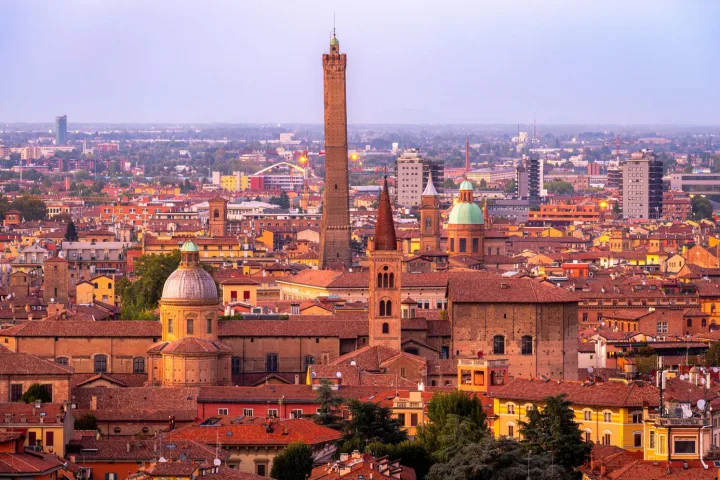
Bologna is nicknamed La Grassa, the Fat One, and most of its dishes never leave Emilia-Romagna in their original form. The ragù you know is not the ragù they make here. The tortellini in the supermarket fridge have little to do with the ones folded by hand every morning. Here is what to eat in Bologna: ten dishes, and how locals actually order them.
What to Eat in Bologna First: The Pasta
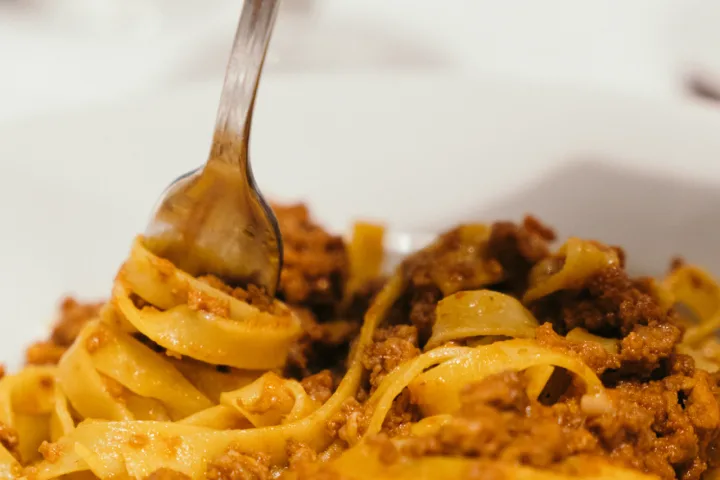
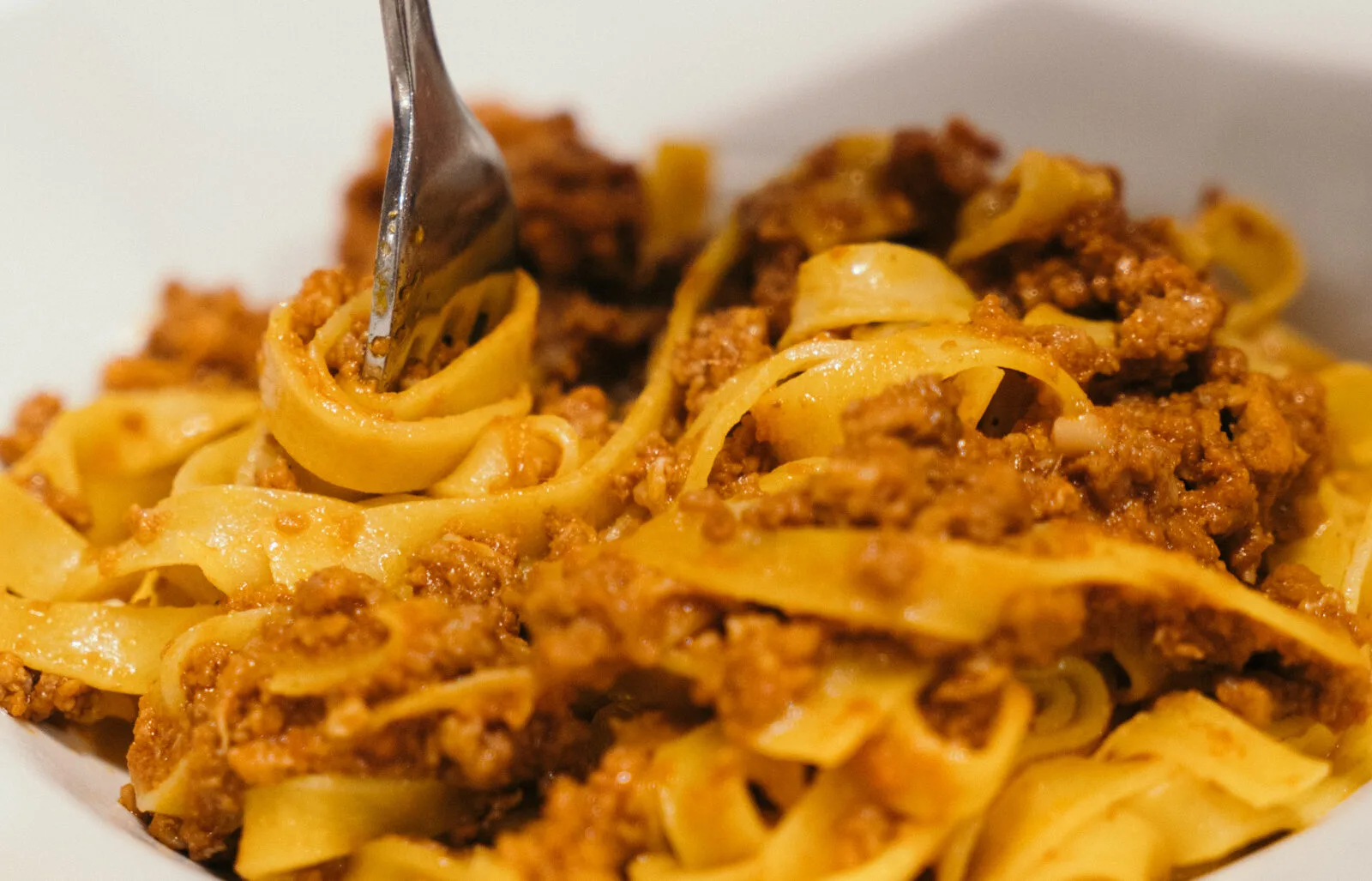
Start with tagliatelle al ragù, the dish the rest of the world turned into spaghetti bolognese. The ragù is mostly meat, slow-cooked for hours with very little tomato. The tagliatelle are fresh egg pasta. In 1972 the Accademia Italiana della Cucina deposited a golden tagliatella at the Bologna Chamber of Commerce. It fixes the official width: 8 millimetres once cooked.
Then come tortellini in brodo, the dish Bologna eats at Christmas and defends all year. The tiny rings are filled with pork loin, prosciutto, mortadella and Parmigiano. They are served in a clear capon broth. Ask for them with cream and the waiter will forgive you, but only just.
Lasagne verdi alla bolognese layers green spinach pasta with ragù, béchamel and Parmigiano, with no ricotta and no mozzarella. Tortelloni are the larger cousins of tortellini, filled with ricotta and herbs and dressed with butter and sage. Gramigna alla salsiccia is short curly pasta with a sausage sauce. It is what a Bolognese family cooks on a weeknight, and one of the few dishes on this list you rarely see outside the city.
Mortadella, Crescentine and the Tagliere
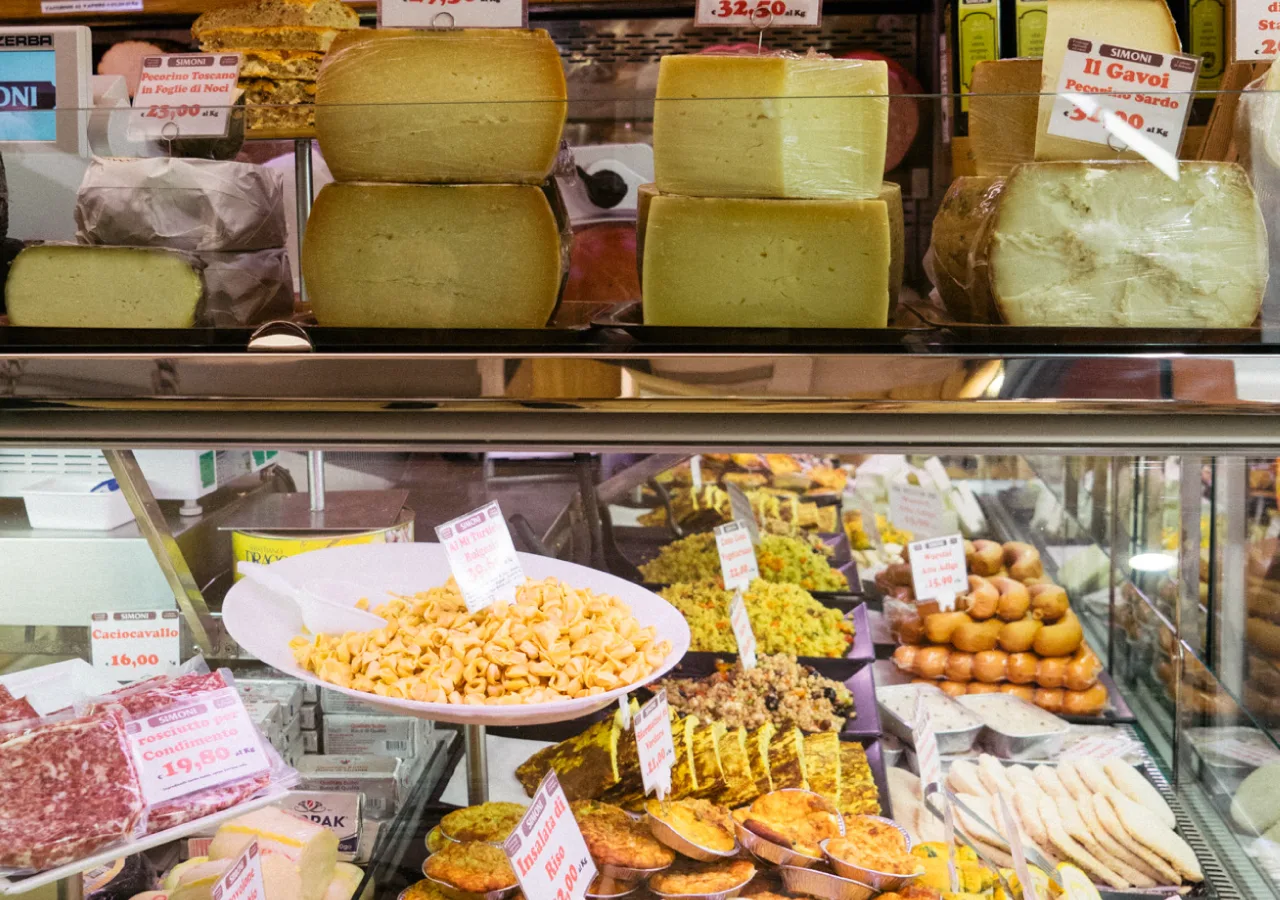
Before any pasta comes the tagliere, a wooden board of cured meats and cheese. At its centre is mortadella, the pink pork sausage studded with cubes of fat that gave American “baloney” its name. In Bologna it is sliced paper-thin, or cut into cubes for the aperitivo. It tastes nothing like the processed version sold elsewhere.
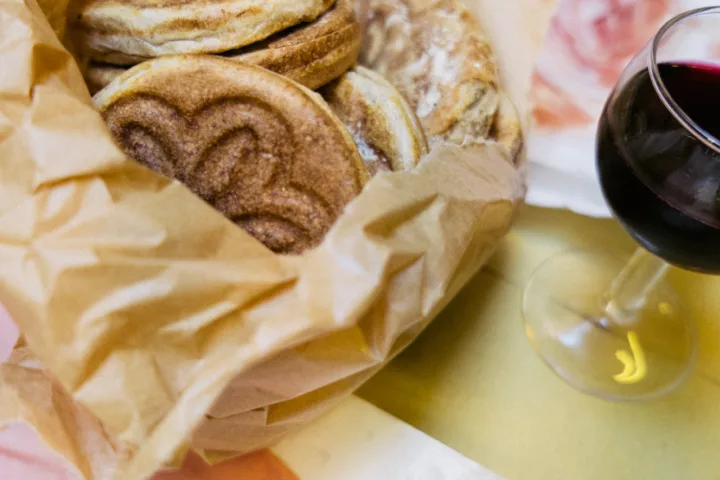
Next to it come crescentine: puffy diamonds of fried dough, served hot. You split them open and fill them with mortadella, prosciutto or squacquerone, a soft fresh cheese. A wedge of Parmigiano Reggiano usually completes the board, with a few drops of balsamic vinegar from Modena if the place is generous.
The Main Course
Cotoletta alla Bolognese
Few visitors order a main course in Bologna, which is a mistake. The cotoletta alla bolognese is a breaded veal cutlet fried in butter. It is then covered with prosciutto and Parmigiano and finished with a splash of broth, until the cheese melts into a sauce. In autumn some trattorias add shavings of white truffle from the hills south of the city.
Friggione
Friggione is onions and tomatoes cooked down so slowly that they turn sweet and almost jammy. It is the classic side for boiled meats, and it suits the cotoletta just as well. It is old-fashioned, cheap and very Bolognese.
Something Sweet: Torta di Riso
Bologna’s signature dessert is torta di riso, a dense cake of rice cooked in milk with almonds, eggs and a dash of liqueur. Families used to bake it for the Festa degli Addobbi, when parishes decorated their streets for a religious procession. Every bakery still has its own version. It is best the day after it is made, cut into small diamonds, with a coffee.
Where Locals Eat Them
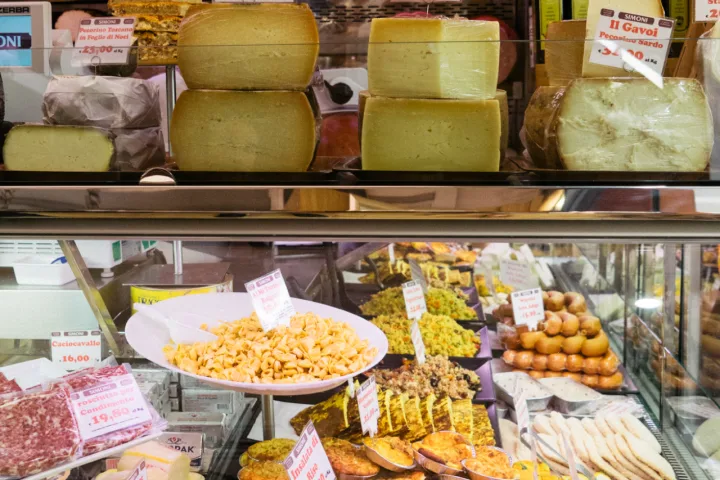
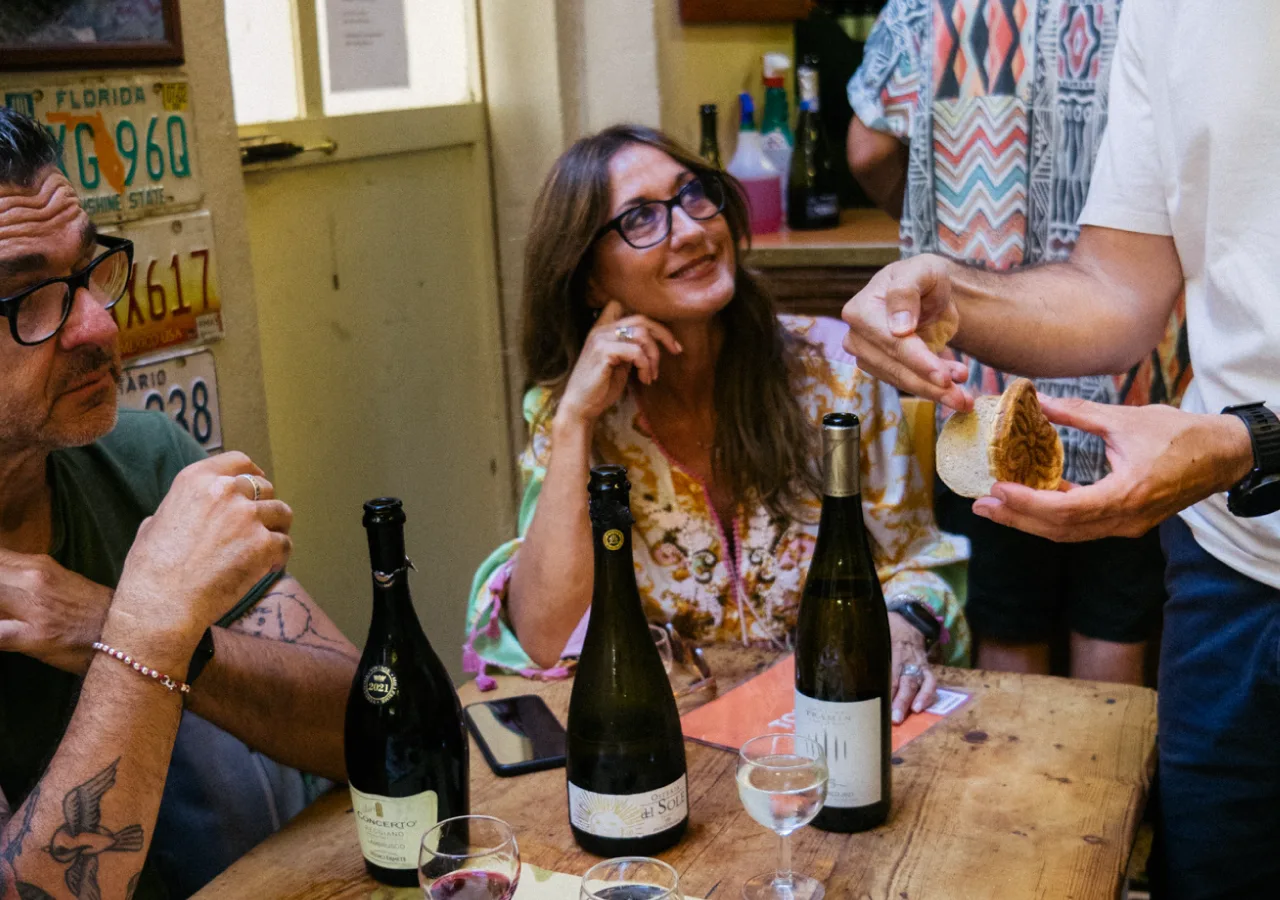
For the tagliere, go to the Quadrilatero, the medieval market streets behind Piazza Maggiore. Its delis have sold mortadella and Parmigiano for centuries. In the same alleys is Osteria del Sole, open since 1465, which serves drinks but no food: you bring your own from the shops outside, and nobody finds it strange.
For pasta and the cotoletta, choose a trattoria with a short menu written in Italian. Go at lunch, when kitchens serve the pasta they made that morning. If a menu offers spaghetti bolognese, keep walking.
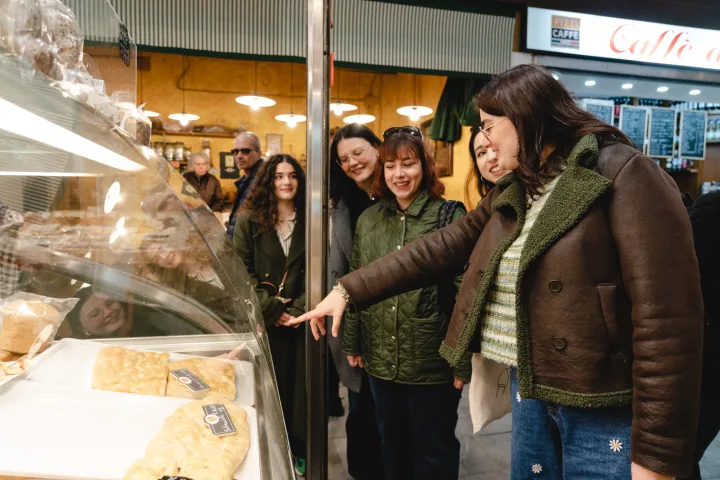
The easiest way to taste several of these dishes in three hours is our Bologna food tour with a local. It stops at a Quadrilatero deli and at Osteria del Sole, then sits down to tortellini and tagliatelle. If you are still deciding, read what to expect on a Bologna food tour. And if you would rather make the pasta yourself, the tagliatelle cooking class teaches you to roll it by hand.